MollyMia Aspire to Inspire before we Expire
Showing posts with label weight loss. Show all posts

Wednesday, 10 February 2021

Benefits of Apple Cider Vinegar with Goli [Advertorial]

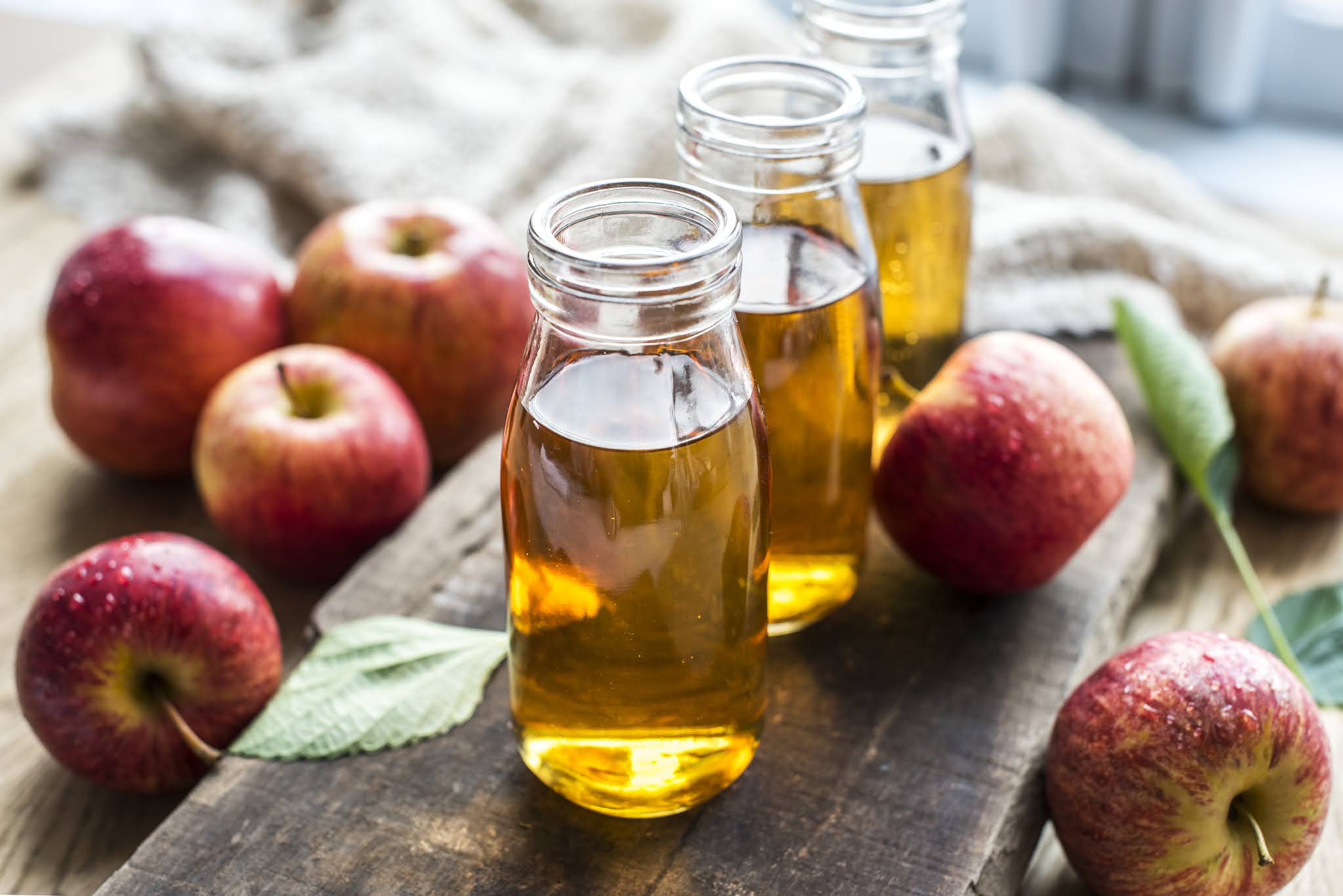
 Apple Cider Vinegar, anyone?


-credits to freepik-

Well, this concoction of just fermented apples and water can be used to add flavour to dishes, potentially help with certain diseases, and also doubles up as a cleaning agent (gasp)!

In recent years, ACV seems to be everywhere and everyone seems to be loving it. But in actual fact, ACV was used as a natural remedy for health problems for a very long time. It just so happens that as more people are trying to improve their life by making healthier and more natural choices these days, the many health benefits of ACV was re-discovered. 

So here's the list of 4 health benefits of ACV based on scientific researches:

1. Helps lower the blood glucose level
Scientific studies has shown that ACV regulates the blood sugar level in diabetic patients. Adding ACV as part of an anti-diabetic diet may help to control the blood sugar level. 

2. Aids in weight loss
Researches have stated that ACV helps in weight management, lower our lipid levels, and prevent fat deposition around our organs.
Check out more details on why ACV aids in weightloss through Dr Eric Berg's video HERE

3. Antibacterial properties
Studies have shown that ACV has multiple anti-microbial properties on different microbial species, affecting microbe growth, suppressing mononuclear cytokine and phagocytic responses. 
I've personally cured myself of a ringworm infection using ACV, so yeah... it really works. 

4. May Lower Cholesterol (LDL)
Although research on cholesterol and ACV in humans is very limited, an Iranian study suggests that ACV may reduce LDL (bad cholesterol), total cholesterol, and triglycerides in people who have high cholesterol. 

Other benefits of ACV includes regulation of our body's pH level, improving our cardiovascular health, helping with indigestion, improves our immune system and energy levels, and even aids in the prevention of cancer. 

But one (or two, for many also hate the acute vinegary taste of ACV) biggest issue with taking ACV, despite all its promising health benefits, is that it erodes our precious tooth enamel. And they're precious indeed, because once tooth enamel is damaged, they cannot be restored. 

So, how do we reap the health benefits of ACV without putting our precious tooth enamel at risk, or suffer from the awful taste of the vinegar? 

Easy, with the Goli ACV Gummies

The Goli ACV gummies are literally just like ACV shots, but with an enjoyable taste (they've created the perfect taste with a mixture of apples, carrots and blackcurrants!). Like ACV, the gummies also contains pectin, a source of dietary fibre (natural prebiotic to support a healthy gut and immune system), vitamins B9 and B12, and includes the Mother (a healthy strain of bacteria, antioxidant and enzymes)


Sounds promising, yes? 
Go check out this amazing supplement at goli.com and use the promo code mollymia to get 20% (until 19th Feb 2021, usual 10%) off your purchases! 

Edited: 


Goli is now working together with Vitamin Angel for the betterment of the world! Do you know that malnutrition is the number 1 cause of preventable child deaths in the world? That's why Goli is proud to support the work of Vitamin Angels, who continually strive to reduce malnutrition in children by giving them access to lifesaving vitamins and minerals. 
With every purchase made on Goli, there will be a 1-for-1 Vitamin grant through Goli's partnership with Vitamin Angels to provide a child in need with a 6-month supply of vitamins! 

Till then,
Mia Foo


Tuesday, 26 May 2020

Intermittent Fasting: 1 Year's Update (IF for Women)

-credits to sgh.com.sg-

It's been nearly a year since my last post on my Intermittent Fasting journey, which means I've been IF-ing for more than a year! So if you happen to be an IF newbie, you might want to check out my 1st post, which will cover what's IF basically about, the different types of fasting methods, and my results after being on IF for just 3 months.

A main reason why I've decided to do an update now is because of the current Covid19 situation, whereby most people are currently on quarantine/lockdown with a drastic decrease in their daily activities plus constantly surrounded by food, may want to jump straight into some hardcore fasting out of desperation to lose or even maintain their weights. 

I will like to say that this update will not be touching on how much more weight (or body fat) I've lost since the previous post, because I've totally stopped tracking (haven't stepped onto the scales for over half a year!) and further weightloss is no longer my goals. 

But just to get it out of the way, here's my current physique update. 
Albeit very badly taken, plus also taken right after a grueling abs workout, hence the muscle definition. 
I DO NOT LOOK LIKE THIS ALL THE TIME (Eg. after a meal).

I'm still tracking calories, because CICO (calories in calories out) is King. It's the very basic of everything related to weight management, be it weight loss, weight gain, or weight maintenance. Do not, I repeat, DO NOT let anybody (cough cough Dr.... cough Fung's.... cough followers) tell you otherwise and believe that 'calories do not matter'. Because if calories really don't matter, we can easily be eating 10,000 worth of calories from the 'right' food everyday and not put on weight. 
Does that sound possible? 
Weight management is simply CICO; but it's just that CICO is not that simple. 

But that aside (and I'm definitely not qualified to tell you more about how CICO is not that simple), the main point of my update is to touch on how IF (16:8 and up) has affected my body, and ladies do take note!
-credits to mindbodygreen.com-

What I've not mentioned in my previous post, was that being on 16:8 (actually it was a range of 15:9 to 18:6 throughout the week) kind of wreck havoc on my menstrual cycle. Just 1 month after being mainly on 15:9, my period (which has been dead-accurate my entire life till then) was late by 3 days. 

"Huh, just 3 days? What's the big deal?" 

Yes, it started with just being 3 days late. But for someone whose period is so accurate that you can even estimate roughly the time of the day it'll start, 3 days is a huge deal. And the delay just got longer and longer over the months, until I'm eventually 70+ days late, and that's 3 cycles late! 
I don't know how you ladies view your monthly periods, although I've came across a few who would gladly lose them for weight loss. But to me it's simple. When your body starts to shut down their reproductive system, it's definitely in trouble and you're no longer in a state of optimal health. 
And sacrificing your health for weight loss just makes no sense. 
In addition, a study (conducted on rats, not humans) has shown that the ovaries of the female rats shrunk after fasting (eating every 2nd day) for 12 weeks.

Many "help" on those Facebook IF groups insist fasting itself is meant to heal our body and so it shouldn't adversely affect my period, and it's probably a drastic caloric reduction that made me lose my period. But I know better, because I've been tracking what I'm eating even before starting IF and so I know, very well, that the only change has been fasting. 
And so I decided to cut back on IF and see how it goes, and went back to 14:10 for 5 days a week and 12:12 on weekends. True enough, just 2 months of cutting back on fasting and I'm back on track (for regular periods), yay!

And just to add on, due to the circuit breaker situation, I've unknowingly increased my fasting hours back to 15:9 for last month and my period, although still accurate, has been cut short by more than half of what's normal for me. So 14:10 is really the sweet spot for me. 

So ladies, do listen to your own bodies and decide what's the best fasting hours for you. You do not have to do 16:8, 20:4 or even OMAD just because your best friend is doing so. Don't get intimidated or pressured to increase your fasting hours just because a random insensitive prick on your Facebook IF group says "14:10 is not even fasting, I wake up, freshen up and it's already 17 hours gone." 
(yes, I've really received such rude judgmental replies from people who don't even know me on some groups, pfft!)
Our bodies are all different and we'll all react differently to the stress (yes, fasting is a form of stress!) inflicted onto our bodies due to fasting. 

Last but not least, if you're intending to start your IF journey now, when you're still pretty much cooped up at home and constantly surrounded by just food and TV shows, I'll suggest that you put it off first. Or you may just start with switching up your diet and start to make healthier food choices instead. I'm definitely no IF guru, but it also doesn't need to take me 1 year to realise that Intermittent Fasting is NOT for the brand new, been-eating-crap-their-entire-life kind of newbies who are constantly craving sugar.  
I have to say that IF itself is NOT a diet, but if you're jumping onto the IF bandwagon to lose weight, then it IS a form of diet for you. And all diets are doomed to fail if they're not meant to be sustainable, and an all-in (or all or nothing) approach to a new lifestyle is doomed to fail. Being pressured to not eat during your fasting hours and forcing yourself to only eat clean (eg. refraining from all "bad" foods even when you're craving for them like crazy) when you can finally eat is definitely not something sustainable.

However, if you feel that you're already quite on track with leading a healthy lifestyle and think that the best time to start is now, perhaps DoFasting App can be of a great help to tide you through these tougher times, not just with helping you to track your fasting hours but also give you some ideas on your home workout routines and delicious recipes with all the calories and macros listed out for you! We all know weight management is 80% nutrition and 20% exercise, right?

And just to show off some of my #healthyeating stay at home lunch these days during Circuit Breaker...

Sweet potato pancakes with baked fish and parmesan vegetables

Marmite oatmeal with baked fish, edamame and egg

Prawn Zoodle Pasta

Egg, Ham & Cheese Muffin using a 2-ingredient Banana Flour Bread

Sweet Potato Zucchini Hash with Baked Eggs. 

Till then,
Mia Foo

Saturday, 29 June 2019

Intermittent Fasting: My take on it after 3 months on IF

If you still aren't familiar with intermittent fasting (IF), you must have been living under a rock!


IF is simply a pattern of eating that cycles between periods of fasting and eating, hence the name intermittent fasting.
Although some overzealous IF-ers will strongly advise that you stay away from carbohydrates (keto-fasting) or at least, (greatly) limit the amount of carbohydrates that you eat per day, IF actually does not specify which food you should (and shouldn't) eat, but only WHEN you should eat them.
Hence, if you view it from that aspect, IF is not a diet, but more accurately described as a lifestyle, or just an eating habit.

There's quite a few methods of IF currently practiced by many, namely:

 - The 16:8 method: Also called the Leangains diet, you simply eat in an 8-hour feeding window and fast for 16 hours.

- The 20:4 method: Also called the Warrior diet, whereby you restrict your daily eating window to 4 hours and fast for the next 20 hours.

- The 23:1 method: Also called OMAD (One Meal A Day), whereby you literally just eat 1 meal everyday, typically over the course of 1 hour.

- The 5:2 Diet: It's a weekly based method, whereby you consume extremely low calories (500 - 600 calories) on two non-consecutive days of the week, but eat as you would usually for the other 5 days.

- Eat-Stop-Eat method: This involves a 24-hours fast, once or twice a week.

The main reason of practicing IF, is for health aspects such as autophagy (cellular repair) and improving insulin sensitivity. It also increases the levels of human growth hormone in our body, and brings about changes in the function of genes related to longevity and protection again diseases.

But all those health sciences aside, I'm just going to focus on one of the biggest (and most popular) "side-effect" of IF, and that is weight loss. With IF, you're forced to shorten the amount of eating time everyday and hence, most of us will unknowingly reduce our calorie intake, resulting in an overall weight loss. But of course, this only happens if you do not "compensate" by mindlessly overeating during your eating windows.

Since embarking on my IF journey, I've joined a few FB groups to learn more about this new eating lifestyle from others and I have to say that there's a group of Dr Fung's followers who seems to have a misunderstanding of his theories put across in his book titled: The Obesity Code and goes around giving misinformed advice to IF newbies, telling them calories do not matter, simply because Dr Fung has said that the traditional diet method of CI/CO (calories in - calories out) is a failure.

Well, I have to admit that I have not read the book, nor do I have any intention to, especially after seeing how those seemingly brainwashed readers behaving in a cultish, aggressive manner towards anybody who mention "counting calories" or "tracking what you eat".
I mean... I don't know, was it the book or was it food-deprivation (being hangry all the time) or what?

Anyway, I'm still going to say that CI/CO is a FACT. If you eat in a deficit, you lose. If you eat in a surplus, you gain. This CI/CO equation sets the basis for any form of diet plans you're seeing out there.
As to why the theory of how this CI/CO model is doomed to fail, it's simply because the conventional way of how this model is practiced is not sustainable. Dieters usually gets obsessed with simply counting calories, ignore the fact that a calorie is (in fact) NOT a calorie, and seems to think that our body works on a 24-hour clock and resets our calorie intake/expenditure every time the clock strikes 12 midnight. Following the CI/CO model, dieters also tend to put their bodies on a FIXED amount of caloric deficit every single day (eg. never exceeding 1200 calories a day), which leads to the onset of metabolic adaptation, whereby your body lowers its basic metabolic rate to fit the lower amount of calories you've been eating. As a result, to continue losing weight, you'll just need to further reduce your calorie intake, until you simply cannot keep up with the ridiculously low amount of calories and eventually falling off the wagon.

Now, while I'm still not all familiar with the science of IF (about the hormones and insulin sensitivity), I got myself started on IF simply because I believe that IF is the way to get around the issue of metabolic adaptation, as research studies has shown that dieters doing IF on a calorie restricted diet tends to lose more body fat than muscle mass as compared to those on just a calorie restricted diet. In other words, IF helps us to burn body fat while preserving our muscle mass.

And so, before I get into how I personally did the 3 months of IF, I would first like to share my results!

7 April 2019
Weight: 143 lbs
Fat %: 28.3 (yikes!)
Muscle %: 30.9

23 June 2019
Weight: 135.6 lbs
Fat %: 21.9
Muscle %: 34.2

And in spite of losing nearly 7 lbs, my estimated metabolism has only dropped 18 calories, which... really is negligible.

And so, how did I plan my IF schedule?

While 16:8 is the most common (and easily followed) method, I have to admit that an 8-hours eating window is still too short for me to fit both my work and gym schedule into it. Hence on weekdays, I'm actually doing 15:9, breaking fast during my lunch break at 130 pm and closing my eating window usually with my protein shake 1 hour after my dinner at 1030 pm.
On weekends, as I do not work (I do work half day on Saturday though) and do not go to the gym, I can easily stretch out my fasting hours to do up to 18:6 (not gungho enough to do 20:4).
And of course, I'm on an eat-clean diet for 6 days a week, and every Sunday is my cheatday!

And here's typically what I eat for my lunch on my eat-clean days.

 
My most commonly eaten carbs is red cargo/brown rice.

And sometimes I treat myself to some quinoa or multigrains (barley, millet, brown rice, and other wholegrains). 

My typical choices for dishes to go along with my self-packed complex carbs will be 1 vegetable, 1 animal protein, and 1 plant based protein from the economic mixed vegetable stall. On my more active days (when I go for two hours workout at the gym), I may throw in one more hard-boiled egg to my lunch for some extra protein. I'll also eat a pre-packed box of fruits (strawberries, blueberries, grapes) along with my lunch meal everyday. :) 

And on some rare occasion when I have dinner plans after work and can't pack lunch, I might even grab some McDonald's too. But it's only their grilled chicken salad with cup corn, guys. Nothing else. And if you've tried the salad, you should know that it's actually pretty tasty but it's such a miserable portion size, hence I prepared my own wholegrain toasts (that also happened to be gluten free but I usually do not avoid wheat) and fresh fruits. 

And while most people skip their breakfast altogether to shorten their eating window into 8 hours, I merely shifted my breakfast to mid-day (and gave up my mid-day protein bar). 
Most of the time, my "mid-day snack" will be a cup of sugarless coffee and two slices of wholemeal bread with 1/2 tbsp of low-fat powdered peanut butter (I'm using PB2) and 1/2 tbsp of sugar-free jam (I'm using Smuckers) or normal peanut butter/almond butter for more taste, as PB2 really lacks the peanut butter taste.


And of course, from time to time I get some "sinful" treats for my mid-day snack as well. This is my favourite "red bean pau", handmade by my lovely neighbour. She calls it Wo Wo Tou (the steamed bun is actually made with rice flour and corn meal instead of wheat flour) and the filling is just mashed up boiled red beans wrapped in a layer of pumpkin mochi. Sounds simple but it's sooooo good! 

And so after my gym sessions, I will get back home for dinner (and try to eat my meal within 1 hour after gym), which is very similar to what I have for lunch (but usually with fish as my animal protein), but all home-cooked (hence less oily, less saucy and less heavily seasoned) and without the starchy carbs. Instead I will have a bowl of soup (such as lotus root pork ribs, radish pork ribs, sweet corn potato pork ribs, korean spicy soft tofu soup etc) for added satiety factor. 

And of course, as I've mentioned earlier, I'll close my eating window with a protein shake at 1030 pm every night. Sometimes, I'll switch out the protein shake for some greek yogurt with frozen berries. On days when I realised that my caloric deficit is too high (I usually target 500 - 600 deficit), I'll give myself a treat of either a serving of Enlightened Ice Cream (low calories, less sugar, more protein), a serving of Khong Guan Marie Biscuits, or a serving of baked almond nuts. 

Predictable, boring diet plan? NO WAY!
Have you forgotten about my Sunday cheatday? Every Sunday, will be the day whereby I forget about the existence of myfitnesspal app on my phone, and eat literally whatever I fancy without caring about my macros or calories. 


The fact that I'm doing 18:6 method on my weekends helps a lot with preventing me from overeating during my cheatday as well. 
I mean, how much can you eat in just 6 hours, right? 

Till then,
Mia Foo


Wednesday, 1 November 2017

#wellnesswednesday - What I eat in a day?

Last year, I embarked on a #eatclean diet (read about it HERE) and successfully lost about 8kg of fats. Previously while on a pretty restrictive, 21 days diet, I was eating about 1200 to 1300 kcals a day and obviously on a high calorie-deficit. Hence, the weight just came off like magic.

While some may tell you that calorie-counting is bullsh*t when it comes to weight loss, that's actually not true at all. Because a caloric deficit is what causing the weight loss. What's truly bullsh*t about calorie-counting is blindly looking at pure numbers (calorie count in each food you eat) and ignoring all your macro-nutrients and simply forgetting about the importance of a balanced diet.

For example, going for deli meat options instead of lean cuts of fresh meat just to save on that 60 kcals? No, please don't do that!

So while I've (almost) completely cut out refined sugar in my diet, I guess I'm still pretty much on a 15-85 diet, meaning 15% of the time I get to eat whatever my heart desires. Refined sugars included. That basically worked out to 1 cheat day in a week, which previously makes up about 2 meals. I've recently started eating 3 full meals for my Sunday cheatday due my revamped exercise routine, which added an hour's worth of badminton game with the BF in the late morning, hence I just felt that I earned an extra cheatmeal. #iexercisetoeatmore

First up, for my typical 3 meals on a non-cheatday:

For breakfast:
1 hardboiled egg
1 weetbix biscuit
OR
2 slices of 100% wholewheat bread
(not those fake extra soft 50% wholewheat)
1 tbsp peanut butter
OR
2 homebaked high protein doughnuts
1 tbsp peanut butter
WITH
1/4 cup blueberries
1/2 cup grapes
4 - 6 strawberries
Kopi C Kosong

For lunch:
1/2 cup brown rice
WITH
mixed rice dishes
(1 veg + 1 egg/tofu + 1 meat)
OR
a choice of filling soup
(usually lotus root pork ribs, white fungus chicken, or kimchi jjigae)

For mid-day snack:
1 mug of My Protein Hot Mocha
WITH
1 Nugo Smarte Carb Protein Bar

For dinner:
Homecooked dishes & Soup
(1 veg + 1 meat +1 seafood + Soup)

For evening snack:
1 to 2 servings of fruits
(kiwi, orange, apple, plum, tangerine, starfruit)
Protein Shake
(My Protein Total Protein + HL Milk)

Just eating these alone will get me about 1600s kcals, which according to my fitbit charge 2, is still on a pretty substantial caloric-deficit of up to 1000 kcals a day (on my most active, spinning day).
Hence, judging on the extra calories I've burnt while at gym for the day, I'll usually throw in more food over at the evening snack time slot, with more caloric dense food such as:

nuts or legumes
(peanuts, mixed nuts, almonds, walnuts, chickpeas)

chocolate
(I'm eating My Protein High Protein Chocolate)

cookies / biscuits
(Homebaked wholegrain & sugarless, or Khong Guan Marie Biscuit/Cream Crackers)

However, on my non-cheat days, I will still limit my daily caloric intake to a maximum of below 2000 kcals (I will hover in the 1900s on my spinning day, whereby I usually burn up to 2700 kcals according to fitbit) and hit my macro ratio of 4 (carbs) - 3.5 (fats) - 2.5 (protein). My ideal would be 5-3-2 or even 4-3-3, but... I love fats as much as I love carbs, so it's really kinda tough. :(

2700 - 1900s is a huge caloric deficit of 700+, and that's unhealthy, you might say. But I would advise that you do not be too obsessed on how much deficit or surplus you have on a day-to-day basis, but aim to even it out over the week and achieve your targeted deficit (or surplus, or break-even) as a weekly average.

My non-cheat days deficit ranges from a negligble 100+ kcals (usually on Saturdays, whereby I'm less active) to 700+ kcals. But on my Sunday cheatday *insert smirking face*, I usually eat all sorts of crap and can easily even out my 6 days of deficit by hitting up to more than 3000 kcals in a single day of eating when I burn at most 2000 kcals.

So, how do you eat to maintain a good health? Do share with me your eating habits down in the comment section below!

Till then,
Mia Foo

Friday, 2 September 2016

#fitnessfriday - Mia's sustainable #eatclean diet plan for weight loss (Part 2)

Previously in Part 1 of this #eatclean diet post, I've shared with you an extensive 21 days diet plan that's based on the idea of Weed-Seed-Feed detox diet, which has taken 3.4kg off my weighing scale.
And then you may ask, what's after the 21 days?

-credits to mqfactor.com-

To be honest, revert to your usual unhealthy
eating habits (eg. stuffing yourselves silly with sugar and fats) and you'll gain them all back in no time. But the idea of this #eatclean diet plan is, you shouldn't, because it takes us as short as 21 days to make or break a habit. Although.... well, some articles has debunk this myth and came up with a much longer time period of 66 days, but just for my case, these 21 days (compared with a significant results obtained to further fuel my motivation and belief in this diet plan) has worked wonders.

However, I still couldn't see myself on a diet that totally avoids refined carbohydrates and added sugar forever. There's also a risk of me losing the battle against my suppressed cravings and eventually losing it altogether. Hence, to keep my (probably) growing gluttony under control, I decided to add in a cheat day per week!

-credits to relatably.com-

And what's a better day than Sunday for some naughty indulgence? Well, it's also because Sundays are my sleep in days, so the craziest I can go is to have 2 full cheat meals instead of 3. 
Portion control, yeah? 
-credits to blitzyourbody.com-

A few pointers to know when adding in your cheat meals/cheat day are:

1. NO GUILT
Well, you've eaten clean for the past 6 days. I know, we don't rewards ourselves with food. We're not dogs. But heck, you earned the chance to satisfy your cravings. So savour it, and enjoy! If you're going to feel guilty after the indulgence, then you're totally missing the whole point of a cheat day.

2. PLAN YOUR INDULGENCE MEAL(S)
This might sounds crazy, almost like you're forcing yourself to eat clean for 6 days with the goal of an unhealthy eating day in mind. But no, you absolutely have to plan your cheat meal(s) beforehand! They should not be a spur of the moment decision, as you'll tend to overeat when your 'emotion' takes over and you'll start to lose focus on your healthy eating goals.

3. LIMIT YOUR CHEAT MEAL(S)
If you're born to be on team #eatclean and has minimal cravings, always, go ahead and limit yourself to just one cheat meal a week. If not, do limit it to 2 cheat meals a week (I usually do just brunch and dinner on my cheat days). Do not, I repeat, do not ever let your cheat meals turn into cheat days, which will eventually turn into cheat weeks and then into cheat months. 
A sensible diet is to always eat healthily with occasional indulgence, not the other way round.

4. PORTION CONTROL
Your cheat day is not your license to binge. 
Yes, it's cheat day so by all means indulge in some potato chips. But if it's stated 7 chips per serving, you eat just 7 chips and not the entire bag of 7 servings at one go just because it's cheat day. 
Doesn't work that way, sweetie. 

Well, I actually cheated for my first cheat meal and had it on the 21st day of my Weed-Seed-Feed diet.

Despite chomping down the entire deep fried battered chicken thigh that's bigger than my face and polishing off half of the crispy-fluffy waffles (I didn't touch the syrup though), I still managed to get a 0.7kg loss on my 3rd week's diet plan. :) 

But things got a little out of hand when I got to the 'true' cheat day on my 4th week.

First, I ate 1/2 a regular box of salted popcorn at Golden Village Cinema.

And then, lunch was more sodium from this bowl of yummy ramen at Menya Musashi.

Then it was half this bag of sugar coated churros with milk chocolate dip, along with half a bag of Chipster potato chips.
Dinner was Yu Tou Lu (fishhead steamboat) and marmite pork chop, which yet again, are sodium laden.
It was a total (refined) carbohydrates plus sodium overload in one day and the result was an almost 1kg weight gain from water retention the very next morning. Luckily, it normalised after 2 days and I actually lost another 0.4kg.

See my point about planning your indulgence meals beforehand and not just eating whatever you see?

My cheat day for my 5th week was definitely better, as I already had in mind what my indulgence for the week would be - WHITE RICE.


And so, brunch was sharing this huge plate of 3 Flame Monster Curry with the BF (I made a mental note eat less of the rice), followed by finishing 1/3 of a bowl of the Blackball Signature Grass Jelly dessert during mid afternoon, and finally Nasi Lemak with Fried Chicken and a small piece of mashed banana filled prata for dinner at Old Town White Coffee.

Weight loss for week 5 is another 0.7kg, increasing my accumulated weight loss over 5 weeks to be 4.5kg.

So how's your #eatclean diet plan coming around? Do share your experiences with me in the comment board below! :)

Till then,
Mia Foo

Thursday, 25 August 2016

#fitnessfriday - Mia's sustainable #eatclean diet plan for weight loss

Hello fellow fitness junkies! Since I missed my rare #wellnesswednesday moment, I shall turn this into a #fitnessfriday post instead. Do let me know which hashtag you prefer, yeah?

If you don't know me, then you must know that I've started gymming frequently (I usually do spinning, hot yoga and body balance, which is a mixture of taichi, yoga and pilates) more than 1 year (almost 2?) back and along the way I've also tried out various weight management programme, out of which my biggest failure being AgeLoc TR90 (my final post on it HERE).
Despite being physically active, I've never really managed to bring my weight down significantly as I couldn't keep my diet in check.
With a change in job, my gym days decreased significantly and I was eventually shocked out of my wits when I saw a number on the weighing scale which I've never seen before for my entire life.

That's it! I'm going on a diet!

After a few google searches on a certain 21 days detox diet programme that revolves around weeding, seeding and feeding, I decided to give it a shot.

The diet plan is a peculiar one, with specific can-eats and cannot-eats that changes each week, or rather with the can-eats adding on each week, spanning through 21 days. The first week was seemingly the most harsh, with the diet gradually easing up week by week.

So for day 1 to 7, it shall be the weeding week. whereby we weed out the bad bacteria, parasites, fungus and yeast through dietary changes. In order to achieve that, some major (and temporary) changes in our diet is inevitable.

During the weeding week, the following food shall be avoided where possible:

All sorts of (starchy) carbohydrates like rice, noodles, bread, pastries and potatoes.
Anything containing yeast
Anything with added sugar
Crustacean & Mollusks
(No seafood other than fish)
Deep-fried food
All dairy products
Alcohols
It's best to avoid coffee, but if you absolutely need it, limit yourself to just 1 cup a day.

My typical daily diet for the first week is as follow:
Breakfast: 2 hard boiled eggs, black coffee without sugar
Lunch: Yong Tau Foo (without noodles, minimal fish cakes)
Afternoon snack: 1 large apple or 1 medium banana
Dinner: Home-cooked stirfry vegetables with lean cuts of meat or fish (pan fried, or stirfry), kimchi
Supper: 2 servings of fruit (Eg. 1 kiwi, 1 small apple)
Daily water intake: 1.8 - 2.1L
Estimated daily calorie intake: 1000 - 1100 kcals

Being a sugar-addict, I thought the total omission of added sugar will be the most painful, but it turned out the omission of carbohydrates was more harsh on me. The first day was painful, and I was hungry half of the day (as I didn't prepare for afternoon snack at work). 2nd day onwards, I learnt my lesson and pack up 1 to 2 servings of fruits as snack to work and it got slightly better. However, I did notice that the usual hot yoga and body balance routines felt slightly more strenuous than it usually would be. And also, by the 3rd day, black coffee without sugar (Kopi O Kosong) tasted perfectly all right to me. I didn't expect myself to get used to a no added sugar diet this quickly.

Weight Loss after Week 1 - 2.3kg


Day 8 to 15 shall be the seeding week, whereby we inoculate the gut with beneficial bacteria.
During the seeding week, we introduce complex (clean) carbohydrates into the diet but still avoid the following food:

No refined carbohydrates like white rice, noodles, white bread, pastries.
Anything with added sugar
Deep-fried food
All dairy products
Alcohols
Limit to 1 cup of black coffee without sugar per day, and 2 servings of seafood (other than fish) in the week.

My typical daily diet for the 2nd week is as follow:
Breakfast: 1 hard boiled egg, 1 weet-bix, handful of blueberries & strawberries
Lunch: 1/2 serving (1/2 cup, cooked) red cargo rice marmite porridge, with choice of 2 stirfry vegetables and 1 stirfry lean meat.
I only cook my own porridge and buy the dishes from hawker centre.
Afternoon snack: 1 to 2 servings of fruits (usually apple and/or banana)
Dinner: Home-cooked stirfry vegetables with lean cuts of meat or fish (pan fried, or stirfry), kimchi
Supper: 1 to 2 servings of fruit (usually apple, orange, kiwi or cherries)
Daily water intake: 1.8 - 2.1L
Estimated daily calorie intake: +/- 1200 kcals

2nd week was quite a breeze as I've gotten used to the taste of red cargo rice during mid-week and having nothing sweet in my diet except for fruits felt perfectly normal.
Hot yoga and body balance sessions felt more manageable (though the burning sensation in my muscles still came quicker than usual) and I added in a session of spinning towards the end of the week and survived it.

Weight Loss after Week 2 - 0.4kg
(As I was on my period for this week, water retention could have affected my weight loss results)
Accumulated Weight Loss after 2 weeks - 2.7kg


Finally, day 16 to 21 will be the feeding week, whereby we feed the healthy bacteria and the entire body what it needs to heal itself.


During the feeding week, we introduce dairy products into the diet and also lifts the ban on deep-fried food and alcohols, but still avoid the following food:

No refined carbohydrates like white rice, noodles, white bread, pastries.
Anything with added sugar

My typical daily diet for the 3rd week is as follow:
Breakfast: 1 hard boiled egg + 1 weet-bix OR 1 steamed sweet potato, handful of blueberries/grapes & strawberries
Lunch: 1/2 serving (1/2 cup, cooked) red cargo rice, with choice of 2 stirfry vegetables and 1 stirfry lean meat OR 1 soup (Eg. slice fish soup or lotus root pork ribs soup)
I only cook my own rice and buy the dishes from hawker centre.
Afternoon snack: 1 to 2 servings of fruits (usually apple and/or banana)
Dinner: Home-cooked stirfry vegetables with lean cuts of meat or seafood (pan fried, or stirfry), kimchi
Supper: 1 to 2 servings of fruit (usually apple, orange, kiwi or nectarine), 1/4 to 1/2 cup HL low fat milk.
Daily water intake: 1.8 - 2.1L
Estimated daily calorie intake: +/- 1200 - 1300+ kcals

3rd week felt like an #eatclean diet has more or less been cultivated as I hardly crave for sugary food anymore, and naturally avoided deep fried food even thought the 'ban' was lifted. I also added an additional spinning session to the week (2 sessions of spinning, 1 hot yoga and 1 body balance) and didn't feel much fatigue during my exercises.

Weight Loss after Week 3 - 0.7kg
Accumulated Weight Loss after 3 weeks - 3.4 kg

You may think that 3.4kg in 3 weeks isn't all that impressive, but the important point to note is that this diet is sustainable as long as you do not let the glutton in you go out of control. Other than the first 1 or 2 days of the weeding week whereby I felt constant hunger from the lack of starchy carbohydrates (and without fruits at hand to fill my tummy), I was well fed and didn't feel starved or deprived at any time. 

I guess this will be my wordiest post ever and without a single photograph, so you weight loss hopefuls might already be seeing stars right now, so I shall end my wall of text here. 
Stay tuned for part 2 of this #eatclean weight loss diet plan (hopefully will be up next week!) whereby I will share my progress of this diet after the 3rd week. 
Hint: Cheat day coming up! 

To know more in-depth about the Weed-Seed-Feed Detox Diet, do check out the link HERE
For added boost in your weight loss results, you can also take the Advascience 21 Day Ultimate Cleanse (available HERE) along with this diet.

Till then,
Mia Foo